


Understanding Berthing Energy: The Foundation of Effective Marine Fender Design


In any port operation, the most critical moment often lasts just a few seconds—the instant a vessel meets the berth.
Every vessel approaching a berth carries kinetic energy that must be safely absorbed during berthing operations. Known as berthing energy, this force plays a critical role in marine fender system design, port safety, and the long-term protection of quay walls and marine structures.
While the process may appear controlled from the outside, behind every successful berthing operation lies a complex interaction of forces. Vessel size, approach speed, berthing angle, and environmental conditions all influence the amount of energy that must be managed and safely dissipated.
This is where the real value of engineering begins.

What is Berthing Energy and Why Does It Matter?
Berthing energy calculations are commonly performed using internationally recognized methodologies such as PIANC recommendations, considering factors including vessel displacement, approach velocity, eccentricity, and berth configuration.
Berthing energy is often described in simple terms: the energy generated when a vessel makes contact with a quay or jetty. But in practice, it’s far more dynamic.
That energy is influenced by multiple factors working together—vessel size, approach speed, berthing angle, and even water conditions. A larger vessel naturally carries more energy, but even a slight increase in speed can dramatically amplify the impact forces involved.
This is why berthing energy can’t be treated as a fixed number. It must be understood in context.
At ESC Marine Mooring Systems, this is one of the first areas where value is created—by ensuring that calculations reflect real operating conditions, not just theoretical assumptions.
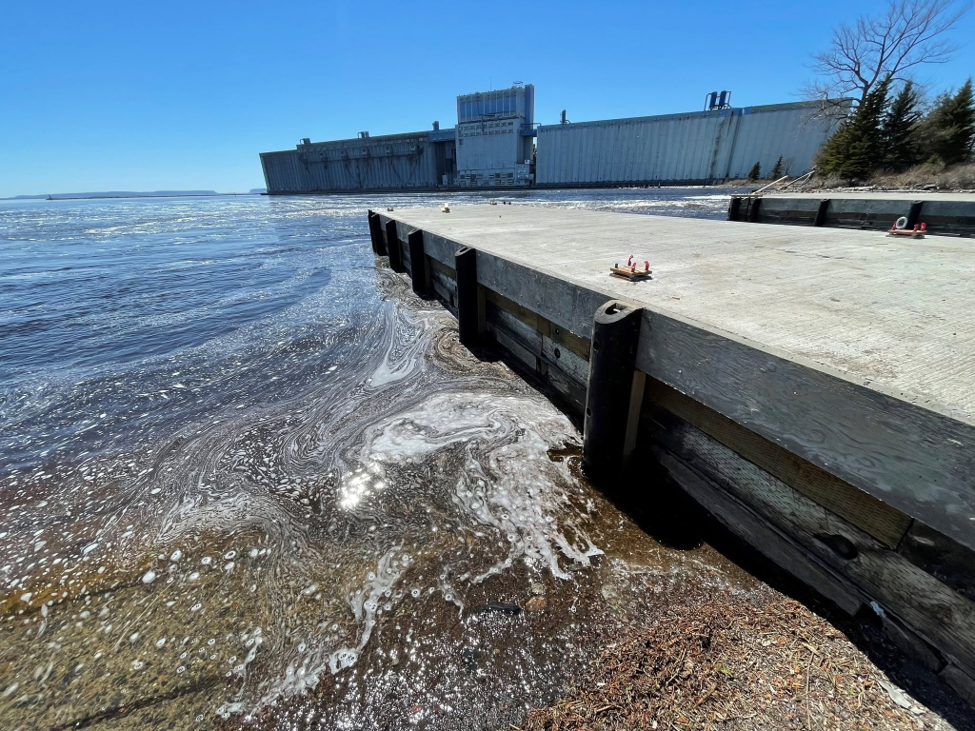
Translating Energy into Protection
Once that energy reaches the berth, something needs to absorb it.
That responsibility falls on the fender system.
But marine fenders don’t simply “take the hit.” They are carefully engineered to absorb energy through controlled deformation, gradually reducing the force transferred to both the vessel and the structure.
Done poorly, the consequences can be severe: structural damage, increased maintenance, and long-term operational risks.
This is why ESC focuses not just on supplying fenders, but on designing systems that behave predictably under real loads.
Balancing Performance in Real Terms

One of the most important—and often misunderstood—parts of fender design is balance.
These two objectives can compete with each other. Increasing energy absorption often increases reaction force, and reducing reaction force can limit absorption capacity.
Finding the right balance is where engineering expertise makes the difference.
ESC approaches this with a clear focus: maximizing protection while maintaining structural integrity. That means selecting the right fender type, configuring it correctly, and ensuring it performs within the expected range of deflection and load.
It’s not about overdesign—it’s about right design.
Designing Marine Fender for the Reality of Operations
Ports are not static environments.
That’s why ESC Marine Mooring Systems applies a site-specific approach to every project. Instead of relying on standard configurations, each system is tailored to match the actual conditions it will face.
This includes understanding of vessel traffic patterns, berthing frequencies, and environmental influences. It also means aligning with international standards to ensure consistency and reliability across the system lifecycle.
By doing this, the system isn’t just designed to work—it’s designed to keep working, even as conditions evolve.

The Value of Getting Berthing Energy Right
Berthing energy is more than a design calculation—it is the foundation of an effective marine fender system. Accurately understanding the forces generated during vessel berthing helps ensure that fenders deliver the right balance of energy absorption and reaction force, protecting both vessels and port infrastructure. As vessel sizes continue to increase and ports strive for greater operational efficiency, the importance of properly engineered fender systems becomes even more critical
Selecting the right marine fender solution requires more than choosing a product. It requires understanding operational conditions, vessel characteristics, berth configurations, and long-term performance requirements. By incorporating accurate berthing energy assessments into the design process, port owners and engineers can improve safety, reduce maintenance costs, and enhance the reliability of waterfront operations.

Partner with ESC for Marine Fender Solutions

At ESC, we provide engineered marine fender systems designed to meet the demands of modern ports, terminals, jetties, and marine facilities. Our team works closely with consultants, contractors, port authorities, and asset owners to evaluate berthing requirements and recommend fender solutions that deliver reliable performance and long-term protection.
Planning a port, jetty, or terminal project? Contact ESC Steel Philippines today to discuss your marine fender requirements. Our team can help you identify solutions that deliver dependable energy absorption, reduced maintenance, and long-term protection for your waterfront operations.


